Lansoprazole
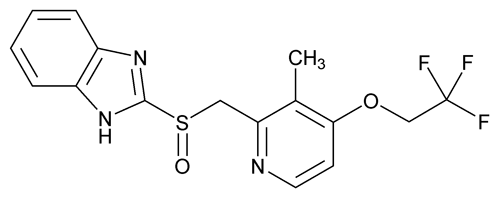
C16H14F3N3O2S 369.36
1H-Benzimidazole, 2-[[[3-methyl-4-(2,2,2-trifluoroethoxy)-2-pyridinyl]methyl]sulfinyl]-;
2-[[[3-Methyl-4-(2,2,2-trifluoroethoxy)-2-pyridyl]-methyl]sulfinyl]benzimidazole [103577-45-3].
 USP35
USP35
 11
11 USP Lansoprazole Related Compound B RS
2-[[[3-Methyl-4-(2,2,2-trifluoroethoxy)-pyridin-2-yl]methyl]sulfanyl]-1H-benzimidazole.
C16H14F3N3OS 353.36
USP35
(lan soe' pra zole).
+'&img=../../images/v35300/cas-103577-45-3.gif&casNumber=103577-45-3&usp=35&nf=30&chemicalStructureImage=true&ID='+parent.myID,600,500);)
C16H14F3N3O2S 369.36
1H-Benzimidazole, 2-[[[3-methyl-4-(2,2,2-trifluoroethoxy)-2-pyridinyl]methyl]sulfinyl]-;
2-[[[3-Methyl-4-(2,2,2-trifluoroethoxy)-2-pyridyl]-methyl]sulfinyl]benzimidazole
[103577-45-3].DEFINITION
Lansoprazole contains NLT 98.0% and NMT 102.0% of C16H14F3N3O2S.
IDENTIFICATION
• B. Ultraviolet Absorption 197U
197U
Sample solution:
10 µg/mL in methanol
Acceptance criteria:
Meets the requirements
ASSAY
Change to read:
• Procedure
Mobile phase:
Acetonitrile, water, and triethylamine (40:60:1). Adjust with phosphoric acid to a pH of 7.0.
Diluent:
Acetonitrile, water, and triethylamine (40:60:1). Adjust with phosphoric acid to a pH of 10.0.
USP35
System suitability solution:
0.1 mg/mL of USP Lansoprazole RS and 0.1 mg/mL of USP Lansoprazole Related Compound A RS in Diluent
Standard solution:
0.1 mg/mL of USP Lansoprazole RS in DiluentUSP35
0.1 mg/mL of USP Lansoprazole RS in DiluentUSP35
Sample solution:
0.1 mg/mL of Lansoprazole in DiluentUSP35
0.1 mg/mL of Lansoprazole in DiluentUSP35
Chromatographic system
Mode:
LC
Detector:
UV 285 nm
Column:
4.6-mm × 25-cm; 5-µm packing L1
Flow rate:
1 mL/min
Injection size:
10 µL
System suitability
Samples:
System suitability solution and Standard solution
Suitability requirements
Resolution:
NLT 5 between lansoprazole and lansoprazole related compound A, System suitability solution
Relative standard deviation:
NMT 1.0%, Standard solution
Analysis
Result = (rU/rS) × (CS/CU) × 100
Samples:
Standard solution and Sample solution
Calculate the percentage of lansoprazole (C16H14F3N3O2S) in the portion of Lansoprazole taken:
Result = (rU/rS) × (CS/CU) × 100| rU | = | = peak response from the Sample solution |
| rS | = | = peak response from the Standard solutionUSP35 |
| CS | = | = concentration of USP Lansoprazole RS in the Standard solution (mg/mL) |
| CU | = | = concentration of Lansoprazole in the Sample solution (mg/mL) |
Acceptance criteria:
98.0%–102.0%
IMPURITIES
Inorganic Impurities
• Residue on Ignition 281:
NMT 0.1%
281:
NMT 0.1%
Change to read:
Organic Impurities
• Procedure
USP35
[Note—Store and inject the lansoprazole solutions at or below 5 using a cooled autosampler. The solutions are stable for about 24 h when stored at 5. ]
using a cooled autosampler. The solutions are stable for about 24 h when stored at 5. ]
Solution A:
Water
Solution B:
Acetonitrile, water, and triethylamine (160:40:1). Adjust with phosphoric acid to a pH of 7.0.
Diluent:
Methanol and 0.1 N sodium hydroxide (1:3)
Mobile phase:
See Table 1.
Table 1
| Time (min) |
Solution A (%) |
Solution B (%) |
|---|---|---|
| 0 | 90 | 10 |
| 40 | 20 | 80 |
| 50 | 20 | 80 |
| 51 | 90 | 10 |
| 60 | 90 | 10 |
System suitability solution:
Prepare a solution containing 25 µg/mL of USP Lansoprazole RS and 25 µg/mL of USP Lansoprazole Related Compound A RS in methanol. Transfer 1 mL of this solution into a 10-mL volumetric flask, and dilute with Diluent to volume.
USP35
Standard solution:
Prepare a solution containing 25 µg/mL of USP Lansoprazole RS and 25 µg/mL of USP Lansoprazole Related Compound B RSUSP35 in methanol. Transfer 1 mL of this solution into a 100-mLUSP35 volumetric flask, and dilute with Diluent to volume.
and 25 µg/mL of USP Lansoprazole Related Compound B RSUSP35 in methanol. Transfer 1 mL of this solution into a 100-mLUSP35 volumetric flask, and dilute with Diluent to volume.
Sample solution:
2.5 mg/mL of Lansoprazole in methanol. Transfer 1 mL of this solution into a 10-mL volumetric flask, and dilute with Diluent to volume.
Blank:
Methanol and Diluent (1:9)
Chromatographic system
Mode:
LC
Detector:
UV 285 nm
Column:
4.6-mm × 15-cm; 5-µm packing L1
Flow rate:
0.8 mL/min
Injection size:
40 µL
System suitability
Sample:
System suitability solution USP35
USP35
Suitability requirements
Resolution:
NLT 6 between lansoprazole and lansoprazole related compound A USP35
USP35
Relative standard deviation:
NMT 3% USP35
USP35
Analysis
Calculate the percentage of lansoprazole related compound B in the portion of Lansoprazole taken:
USP35
Samples:
Standard solution, Sample solution, and Blank
Identify the lansoprazole peak and the peaks due to the impurities listed in Table 2. Measure the areas for the major peaks, excluding peaks obtained from the Blank.
Calculate the percentage of lansoprazole related compound B in the portion of Lansoprazole taken: Result = (rU/rS) × (CS/CU) × 100
| rU | = | = peak response for lansoprazole related compound B from the Sample solution |
| rS | = | = peak response for lansoprazole related compound B from the Standard solution |
| CS | = | = concentration of USP Lansoprazole Related Compound B RS in the Standard solution (µg/mL) |
| CU | = | = concentration of Lansoprazole in the Sample solution (µg/mL) |
USP35Calculate the percentage of lansoprazole N-oxide, lansoprazole sulfone, and any other individualUSP35 impurity in the portion of Lansoprazole taken:
lansoprazole N-oxide, lansoprazole sulfone, and any other individualUSP35 impurity in the portion of Lansoprazole taken: Result = (rU/rS) × (CS/CU) × (1/F) × 100
| rU | = | = peak response for each impurity from the Sample solution |
| rS | = | = peak response for lansoprazole from the Standard solution |
| CS | = | = concentration of USP Lansoprazole RS in the Standard solution (µg/mL) |
| CU | = | = concentration of Lansoprazole in the Sample solution (µg/mL) |
| F | = | = relative response factor for each impurity (see Table 2) |
Acceptance criteria
Individual impurities:
See Table 2. Disregard any peak below 0.05%.USP35
Disregard any peak below 0.05%.USP35
Table 2
| Name | Relative Retention Time |
Relative Response Factor |
Acceptance Criteria, NMT (%) |
|---|---|---|---|
| Lansoprazole N-oxidea |
0.8 | 1.3 | 0.1 |
| Lansoprazole | 1.0 | — | — |
| Lansoprazole related compound A (lansoprazole sulfone)b | 1.1 | 0.82 | 0.4 |
| Lansoprazole related compound BUSP35 (lansoprazole sulfide)c |
1.2 | —USP35 |
0.1 |
| Other individual impurity |
— | 1.00 | 0.1 |
| Total impurities | — | — | 0.6 |
|
a
[[(1H-Benzimidazole-2-yl)sulfinyl]methyl]-3-methyl-4-(2,2,2-trifluoroethoxy)-pyridine 1-oxide.
b
2-[[[3-Methyl-4-(2,2,2-trifluoroethoxy)-2-pyridyl]methyl]sulfonyl]benzimidazole.
c
2-[[[3-Methyl-4-(2,2,2-trifluoroethoxy)-pyridin-2-yl]methyl]sulfanyl]-1H-benzimidazole.
|
|||
SPECIFIC TESTS
• Water Determination, Method Ia 921
921
Sample:
1.0 g
[Note—Use 50 mL of a dehydrated mixture of pyridine and ethylene glycol (9:1 to 8:2) as the solvent. ]
Acceptance criteria:
NMT 0.1%
ADDITIONAL REQUIREMENTS
• Packaging and Storage:
Preserve in tight, light-resistant containers. Store at room temperature, and protect from excessive heat.
Change to read:
• USP Reference Standards 11
USP Lansoprazole RS 
') + '&img=../../images/v35300/cas-103577-45-3.gif',600,500);)
USP Lansoprazole Related Compound A RS
2-[[[3-Methyl-4-(2,2,2-trifluoroethoxy)-2-pyridyl]methyl]sulfonyl]benzimidazole.
C16H14F3N3O3S 385.36
2-[[[3-Methyl-4-(2,2,2-trifluoroethoxy)-2-pyridyl]methyl]sulfonyl]benzimidazole.
C16H14F3N3O3S 385.36
USP Lansoprazole Related Compound B RS
2-[[[3-Methyl-4-(2,2,2-trifluoroethoxy)-pyridin-2-yl]methyl]sulfanyl]-1H-benzimidazole.
C16H14F3N3OS 353.36
USP35
Auxiliary Information—
Please check for your question in the FAQs before contacting USP.
| Topic/Question | Contact | Expert Committee |
|---|---|---|
| Monograph | Elena Gonikberg, Ph.D.
Principal Scientific Liaison 1-301-816-8251 |
(SM32010) Monographs - Small Molecules 3 |
| Reference Standards | RS Technical Services 1-301-816-8129 rstech@usp.org |
USP35–NF30 Page 3642
Pharmacopeial Forum: Volume No. 36(6) Page 1547